I will say something most studio owners keep to themselves: sales is my weakest link.
Not the design, and not the code. That part I love, and it is the reason Kernelis Studio, my web design studio in Isabela, Puerto Rico, exists. The weak spot is everything that has to happen before the work begins: finding the people who need my service, starting the conversation, following up, and asking for the yes.
I have thought about why that is, and I think I finally understand it. Selling takes me out of creativity and puts me into what I call routine. This post is about that shift, why it is harder than it looks, and what I am doing about it. If you are a founder who loves making things and finds selling them hard, I wrote it for you too.
What makes selling different from creating?
Because creating and selling use logic in different ways. Design and code leave room to explore, and every project can be solved a new way. Sales rewards technique, and a good portion of that technique is routine: the same calls, the same follow-ups, the same steps, every day. For a founder who loves to create, the hard part is not the work. It is the switch from one way of thinking to the other.
Creating has room to move
People sometimes treat design and code as opposites, as if one were art and the other were logic. In my experience, they work together.
Receiving a degree in IT doesn't make you a programmer. The field of Information Technology is vast. I found strength in networking but ultimately found passion in coding, teaching myself several languages until I settled on website design. As I wrote in From Code to Community, design without code is like having a canvas without paint. Code is logic, all of it. A button either works or it does not. A page either loads fast or it does not. But inside that logic there are endless possibilities for creativity.
There are many ways to lay out a menu page for a restaurant, a SaaS provider, even a school, and several of them are good. I can write a headline three ways and see which one reads best on a phone. I can change the spacing, test it, and change it back. The problem holds still and lets me explore it. Paint is flexible: you mix, you layer, you scrape it off and start again, and nobody minds, because what matters is the finished picture.
That flexibility is where the creative part of the work lives. The logic is there, and it has to be right, but it bends. It gives me choices.
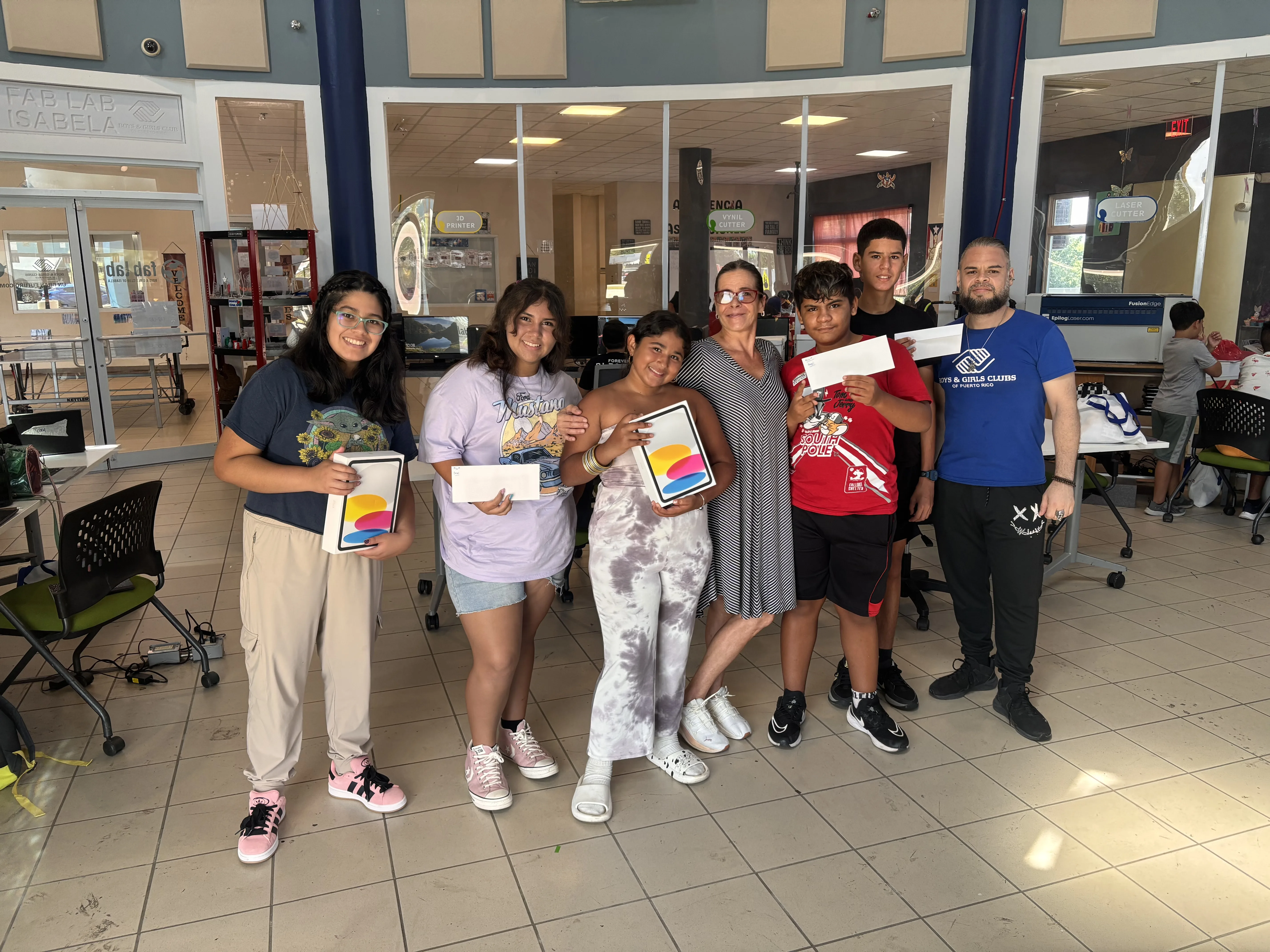
Take a build that has been in house for several months. What began as a coding community for kids ages 8 to 17 now teaches kids the principles and fundamentals of website design, leading into prompt engineering: how to explain their design direction to an AI model. Designing for children is loads of fun. We have color, animation and characters. But all of it follows a logic on the page: fonts large enough for children to read clearly, colors that bring excitement to the learning experience, and characters that follow them throughout the page. It is not difficult to follow those principles and play as we design. And while there is a pattern, no two designs are the same. Each one is approached on its own, as a new design experience.
Selling has a routine
Sales uses logic too. It is just a different kind.
Selling well is a technique. Not all technique is routine, but a good portion of it is: the same steps, in the same order, every day. Make the list. Make the calls. Send the follow-up. Send the second follow-up. Write down what happened. Do it again tomorrow, whether or not yesterday worked.
There is real skill in that. People who sell well are not improvising. They have a script they have refined until it sounds like a conversation, a follow-up schedule they keep without thinking about it, and a way of hearing the same question for the hundredth time as if it were the first. That is a craft. It is simply a different craft from mine.
The difference is where the room is. In design, the room is in the work itself: every project asks to be solved a new way. In sales, the steps barely change. What changes is the person on the other end of the line.
For a mind that likes to explore, that is the hard part. Repetition does not feel like progress, even when it is the very thing that brings in the work. It is not that I cannot follow a routine. It is that a routine asks me to step away from what I do best and do something else, on schedule, whether or not inspiration shows up.
What happens when one person does three jobs?
The work still gets done. What it costs is the time lost switching between jobs. At Kernelis Studio, I am the designer, the developer and the salesperson. That is normal for any small business. A salon owner is often the receptionist too. A food truck owner often keeps the books after closing.
Doing several jobs is not the problem. Switching between them is. Every switch has a cost. Stopping in the middle of a build to take a call breaks the thread of the build. Sitting down to make calls after a morning of design means part of my head is still on the layout. Every hour on the phone is an hour not building, and every hour building is a lead not called.
As a startup, my typical week may have two projects booked and one day for lead generation. That is where my business gets its peaks and valleys, because I should be spending at the very minimum three days a week on lead generation, cold calling and follow-ups. Because of this, scaling has been a bit slow. Understanding this weakness has led me to change my schedule and put the emphasis on sales.
The new schedule helps, but it is only half the answer. It is tempting to treat this as a scheduling problem: block the calendar, protect the hours, try harder. That misses the real issue. Sales does not respond to the approach that makes design work. You cannot explore your way through a follow-up list. It asks for the same steps, done the same way, every time.
How do you build a sales routine that runs on its own?
Treat the routine parts of sales the way you would treat any task a website repeats: build a system for them once, test it, and let it run, so your own time goes to the conversations.
Routine is not new to my work. Every site built at Kernelis Studio goes through the same checks before a client sees it: axe DevTools for accessibility and Google PageSpeed Insights for speed. Same tools, same order, every project. Those checks are pure routine, and they exist to protect the creative work. Nobody would call them the creative part, but the creative part would not hold up without them.
That is the difference between a routine that serves the work and a routine that competes with it. The checks happen inside the build, so they never pull me away from it. Sales happens outside the build, so every hour of it is an hour somewhere else.
Here is what changed my thinking. I am a builder. When something on a website has to happen the same way every time, I do not do it by hand. I build it once, test it, and let it run. A contact form does not need inspiration to send an email. A booking calendar does not need a good mood to hold an appointment.
Sales has parts like that. The first few minutes of almost every conversation are the same: who is calling, what the business is, what they need, and when we can sit down and talk properly. That part is routine by nature, and routine is exactly what a well-built system handles best.
So instead of trying to become a different kind of person, I am designing the routine the way I would design anything else: once, with care, and then on repeat.
The first step is setting up an AI voice agent, software that answers calls in a natural voice, asks set questions and books appointments. It will answer when I cannot, in Spanish or in English, take down the details of the business, and book the consultation. It handles the routine. I take the conversation. I will write about how that works, and what it will and will not do, in the next post.
What should a founder never automate?
The conversation. None of this means handing my clients to a machine. The consultation is still free, and it still starts the way it always has: by listening. Your goals, your customers, the quiet problems your website should be solving. That conversation is not routine, and it never will be. Every business is different, which is exactly why the work is custom.
What changes is how we get to that conversation. The steps that are the same every time can run the same way every time. The part that needs a person gets me, with my full attention, instead of the half of me that is still thinking about a layout.
How to make sales easier when it is not your strength
If you design, cook, cut hair or build things for a living, there is a good chance selling is your hard part too. Four ways to think about it:
Name the switch, not the weakness. "I am bad at sales" does not tell you what to fix. "Sales pulls me away from the work I do best" does.
Separate the routine from the relationship. Most of what sales asks for is routine: answering, following up, scheduling. But a large part is relationship building: the conversation where someone decides to trust you. Build a system for the first. Protect your best hours for the second.
Build the routine once. If a step happens the same way every time, write it down, make it simpler, and then hand it to a tool or a person, so it stops depending on how you feel that day.
Keep the part only you can do. Nobody can listen to your customer the way you can. That part is not routine, and it deserves your full attention. This is relationship building, which is exactly what we want as founders.
Frequently asked questions
Who will I talk to when I contact Kernelis Studio?
Me, Adelaide. As the founder, I welcome the opportunity to leave my comfort zone and get to know you. The consultation is always with me.
Is the consultation really free?
Yes. It is a free consultation where we listen first. We map your goals, your audience, and the quiet problems your website should be solving, and you leave with a straight read on what to fix first, whether or not we work together.
Will an AI agent handle my consultation?
Never. The voice agent will only answer the calls I cannot take, gather the basics about your business, and book a time for us to talk. The consultation itself is a conversation with me.
What is an AI voice agent?
An AI voice agent is software that answers phone calls in a natural-sounding voice. It can ask set questions, take down details and book appointments, in more than one language. At Kernelis Studio, it will handle the first few minutes of a call so the conversation itself stays with me. An AI voice agent is also a product you may want to consider, and we can certainly discuss your goals.
How much time should a founder spend on sales?
It depends on the business. In my case, one day a week is not enough. I should be spending at the very minimum three days a week on lead generation, cold calling and follow-ups. With only one, the work comes in peaks and valleys.
Why write about a weakness on a business blog?
Because selling is part of every small business owner's day, not only mine. Saying it plainly is being truthful with your clients and more useful than pretending every part of running a studio comes naturally.
Creating, with a routine to support it
Kernelis Studio started because I love to create. That has not changed, and I do not want it to. What I am learning is that a creative business still needs a routine, and that the routine can be designed with the same care as everything else.
Creating has room to move. Selling brings routine with it, but also growth: learning, and meeting you, my future client. My job now is to build that routine well enough that it runs on its own, so I can spend my time with you, build what truly matters, and design that vision into something memorable.
If you would like to talk about your business, the consultation is free, and it starts the same way it always has. By listening.
With love,
Adelaide Canino
Founder, Kernelis Studio