It comes early in the conversation, usually inside the first two minutes, and it almost always arrives the same way. Quietly. A little quickly. Said like an apology, before anyone has asked for one.
Sometimes it comes with a laugh that is not really a laugh. Sometimes it comes with a phone already in the hand, held slightly away from the body, as though the phone were the evidence.
It is almost never true.
Look at what you did before nine this morning
You checked the weather radar, because it is September and you have learned not to trust a sky that looks fine.
You answered six WhatsApp messages. Two were orders, one was a supplier, one was somebody asking if you are open today, and one was your cousin.
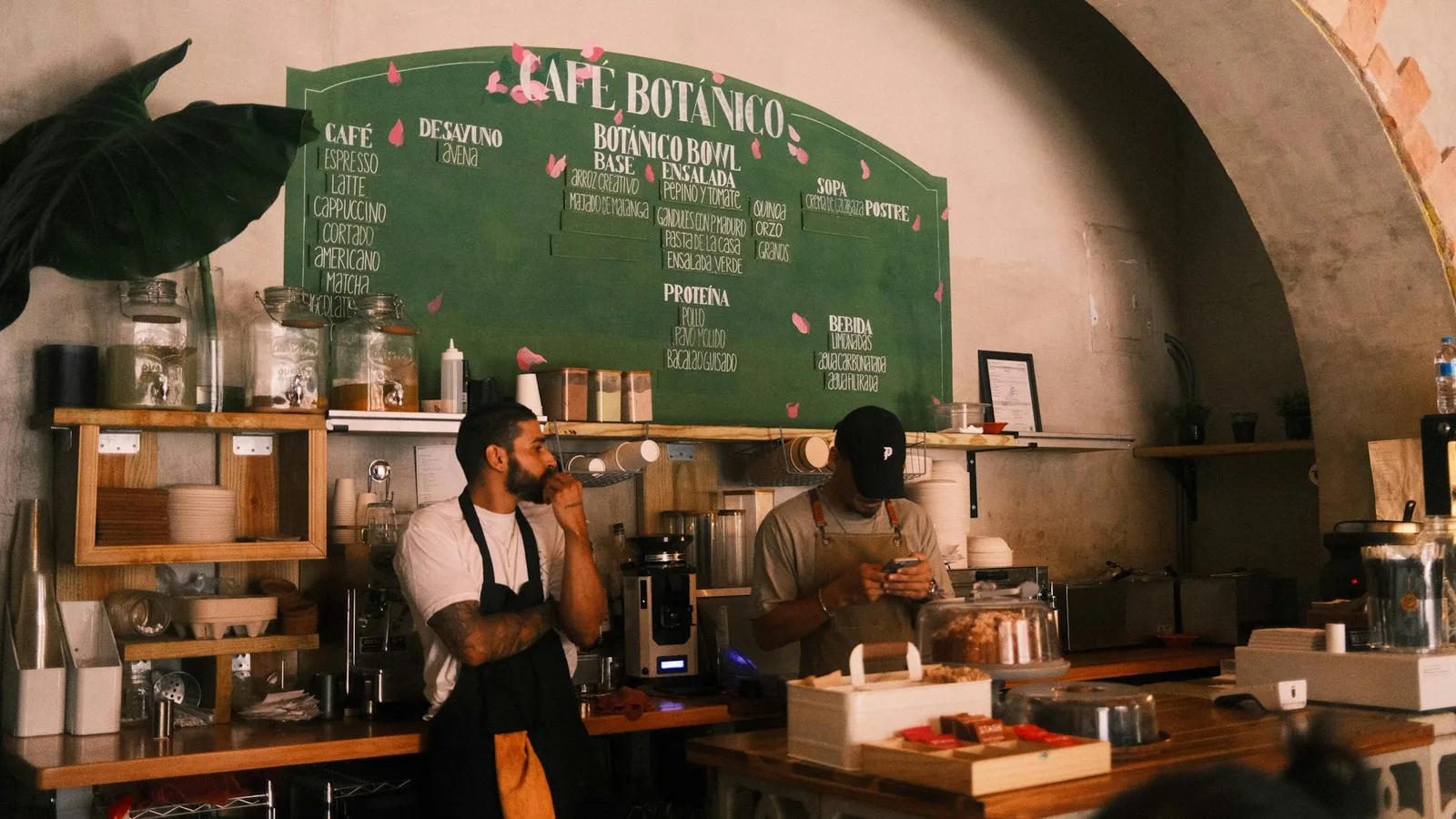
You posted to Stories before the fryer was hot, or before the first client was in the chair, or from the parking lot where you are set up for the day.
You took a payment on ATH Móvil. You checked whether the delivery app had changed its cut again. You looked at last night's numbers. You reposted a customer's photo and thanked them by name, because you know their name.
And somewhere in there you told a stranger on the phone that you do not know anything about technology.
You are running an entire business from a device that fits in an apron pocket, in two languages, through a season that can close you for a week without warning. That is not somebody who knows nothing. That is fluency.
Our island runs on phones, and the numbers are not subtle
The PR Digital Trends Study 2026, published by the Asociación de Ejecutivos de Ventas y Mercadeo de Puerto Rico, found that digital media use here has reached 95% of the population aged 12 and over, up from 93% the year before.
Two figures underneath that headline matter more than the headline does:
- 97.9% of digital users own a smartphone
- 68.3% have internet service at home
Sit with those together for a second. Almost everybody has a phone. Roughly a third of the island does not have a connection at home.
Puerto Rico did not come online through laptops and desks and office chairs. It came online through phones, and it stayed there. Average daily mobile use is now 5.2 hours.
That is not a statistic about other people. That is your customer, standing outside your place at 7:40pm, phone in hand, deciding whether you are open.
And it is you, at the counter, running the business from the same device.
Using and building are two different jobs
Here is the thing nobody says out loud to small business owners, so we will say it.
Being excellent at using something has nothing to do with being able to build it. They are separate skills. Almost nobody has both, and there is no shame anywhere in that sentence.
You can drive every day without being a mechanic. You can cook food that people drive across the island for without milling your own flour. You can run a salon that is booked three weeks out and still have no idea why you do not appear on Google Maps.
None of that is a deficiency in you. It is a gap in labor. Labor is something you hire, the same way somebody hires you to cook, or to cut, or to feed forty people at a festival in four hours.
Why the apology happens
We want to name this part, because we think it is the real reason the sentence comes out so fast.
"I don't know anything about technology" is rarely a statement about knowledge. It is a defense. It is bracing for the moment when somebody uses complexity as leverage, quotes a number with a straight face, and lets you feel small enough that you stop asking questions.
Plenty of owners have had that happen. Some have paid thousands for a site they were then charged again to update. Some were handed a login they never understood and a system nobody explained. Some were quietly made to feel that the confusion was their fault.
So they apologize first. It is cheaper to say you know nothing than to be shown it by someone billing hourly.
We are not going to do that, and we would rather say so in public than only in a sales call.
Three businesses, three problems, zero incompetence
A restaurant in Isabela. The food is genuinely excellent. The whole menu lives in an Instagram photo posted eight months ago, and every price on it has changed since.
Google cannot read a picture of words. When somebody searches for the dish you are known for, that dish does not exist as far as any search engine is concerned. The owner did nothing wrong. They put the menu where their customers were. Nobody mentioned that a photo is a wall.
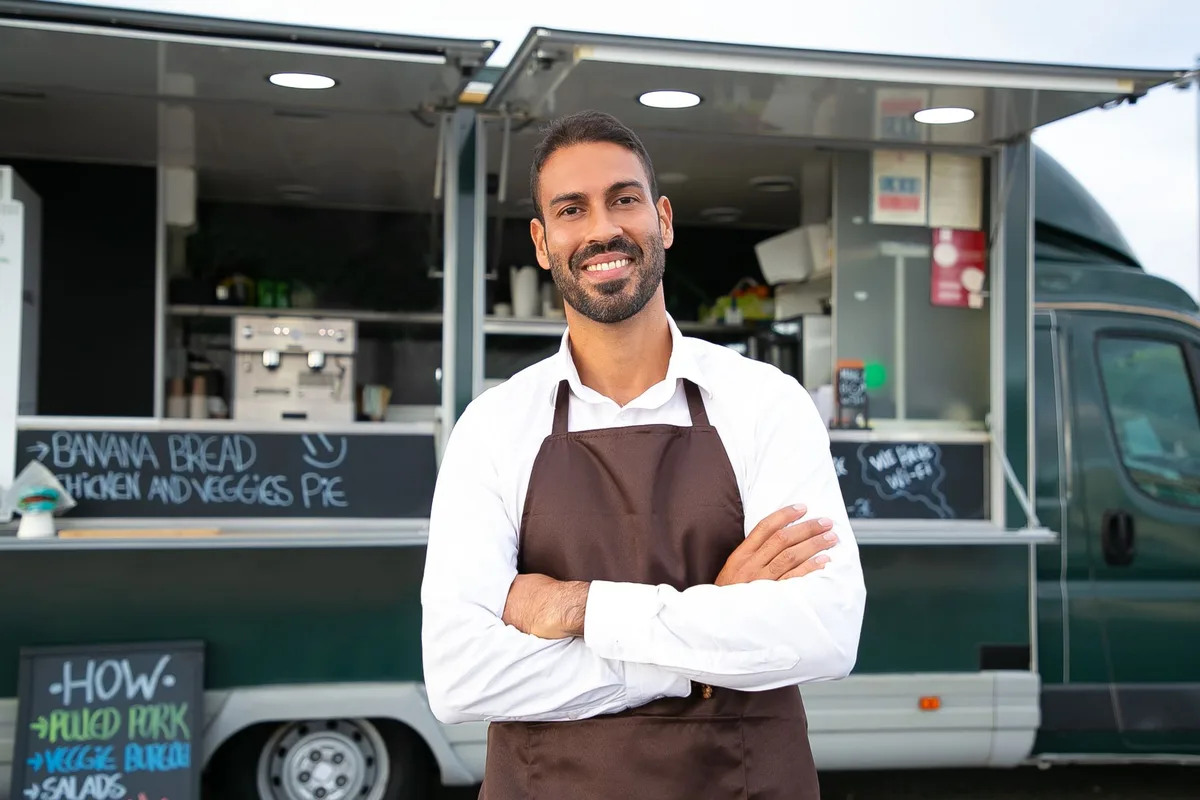
A food truck. Your location is everything, so it goes into Stories every morning: where you are located, your menu, when are you open, how is the weather?
Anyone who did not open Instagram in the last twelve hours has no idea. The post is gone by tomorrow. The owner is doing exactly what the platform trained them to do, and the platform is built to forget. That is not a discipline problem. It is a tool that deletes your Story every day.
A beauty salon. The appointment book is a WhatsApp thread. Actually it is forty WhatsApp threads.
Two clients booked the same Saturday slot. One confirmed and did not come. Every night there is a scroll back through messages to work out who is actually coming tomorrow, and the answer is somewhere between three conversations and a voice note. It works. It works right up until the week it costs real money, and by then the business has grown enough that going back is not an option.
Three fluent operators. Three problems that have nothing to do with intelligence and everything to do with being handed tools that were never designed for the job.
What "we see you" actually means
It is easy to write that line and mean nothing by it. Here is what we mean.
We know that September is not a month here, it is a posture. We know that a closure is not a day off, it is a week of income that is not coming back. We know what it costs to reopen after a storm and act normal for customers who need you to be normal.
We know that "slow season" is a polite phrase for a genuinely frightening stretch of calendar. We know that tourist money arrives in waves and that local money is what carries you between them.
We know that you have been sold to by people who did not know your street, could not pronounce your town, and quoted mainland prices for work they subcontracted anyway.
And we know that the dream you are quiet about is not small. It is just tired of being explained to people who do not listen.
What we actually need from you
Small, and you already own every piece of it:
- Your logo, in the original files if they still exist. A photo of a sign is a starting point if they do not.
- Real photos. Your food, your space, your work, your hands. Not stock. The phone in your pocket takes better pictures than most stock libraries sell.
- Your menu or your services, with prices. Whatever form it is in now, even a note on your phone, even a photo of a chalkboard.
- One sentence about what you do. Not a mission statement. The sentence you would say to somebody at a red light.
That is the whole starting kit. Everything after it is our job: the code, the hosting, the structured data, the Spanish and the English written rather than run through a translator, the accessibility, and the part where it loads fast on a phone with two bars in a parking lot in Aguadilla.
You should not have to learn a content management system to change your own prices. You should not have to know what hreflang means, or what a redirect is, or why your images need alt text. You should be able to send a message that says "las empanadas ahora son a $4" and have it be done.
What the first conversation is actually like
We think part of why people put this off for years is that they do not know what they are walking into. So here is the whole thing, in advance.
You tell us about your business. Not about websites. About what you sell, who comes in, what the good days look like and what the slow ones do to you. We ask questions like what do people call and ask you all day, because the answer to that is usually the first page of the site.
You will not be asked to choose a platform. You will not be asked whether you want WordPress or something else, because that is our decision to make and then live with. You will not be shown a list of packages with checkmarks and made to work out which one you are.
At some point you will probably say you do not know anything about technology. We will keep going.
Then we tell you what it would cost and how long it would take, in numbers, out loud, in the first conversation. Not a range with an asterisk. If we do not think we are the right fit, we say that too, and we mean it as information rather than as a negotiating move.
You are allowed to say no. You are allowed to say not this year. Nobody follows you around the internet afterward.
You already made the harder decision
Somewhere along the line you decided to open. To buy the truck, or sign the lease, or put your own name on a chair and hope people would sit in it.
You did that in an economy that does not make it easy, on an island where the power and the weather and the shipping all get a vote in your week. You did it knowing that if it failed, it would be yours to carry.
Compared to that, this is small. Deciding to have a website that works is not the brave decision of your life. You already made that one, probably years ago, probably while frightened.
The reason we keep saying this is that the fear around technology is almost never about the technology. It is about the unknown. That is a reasonable thing to protect yourself from, and the protection has just been costing you customers who could not find your hours.
Why we build for this market on purpose
Small businesses and women founders are the workhorse of this economy. Not a segment to be marketed at. The engine itself.
They are also building in conditions that would quietly close a lot of the companies that write about resilience without ever having to practice it.
We are from here. We build for here. When somebody tells us they do not know anything about technology, what we actually hear is a person who has run a business on a phone through storms and closures and seasons that swing from a line out the door to nobody at all, and who has never once been given tools built for the way they really work.
That is not a customer to be impressed. That is a person to be equipped.
The part we want you to take with you
You are not behind. You are fluent in the using technology, and building technology is not your job. It is ours, and we like it, and we are good at it.
The idea you have been carrying around, the one you have stopped bringing up because the last person made it sound complicated and expensive, is buildable. You do not have to become a different person to have it. You do not have to learn to speak our language either.
Bring your vision, your story. Leave the rest to us.
Frequently asked questions
I have no technical background. Can I still get a real website?
Yes, and it is the normal case rather than the exception. You bring what you know about your business and your customers. The technical decisions are ours to make and ours to keep making after launch.
Do I need to know what I want before I call?
No. Most owners arrive with a feeling rather than a specification. Something like people cannot find my hours, or I keep losing bookings in WhatsApp. That is more than enough to start from.
Will I be able to update it myself?
You tell us what changed and we handle it. You should not have to learn a content system to change your own prices, and you should never be charged for asking.
What do you actually need from me?
Your logo files if they still exist, real photos, your menu or services with prices, and one sentence about what you do. That is the whole starting kit.
Why does a website matter if my customers find me on Instagram?
Instagram is an audience you rent. The algorithm decides who sees you, the app decides what it keeps, and none of it is searchable when somebody is looking for you by name at nine at night.
Sources
Digital and mobile figures: Asociación de Ejecutivos de Ventas y Mercadeo de Puerto Rico, PR Digital Trends Study 2026, presented at the SME Digital & Innovation Forum, May 2026.