It is a Friday around seven. Somebody has pulled over on the 466 with three hungry people in the car, and they are looking at your Instagram, trying to work out whether you have anything their daughter will eat.
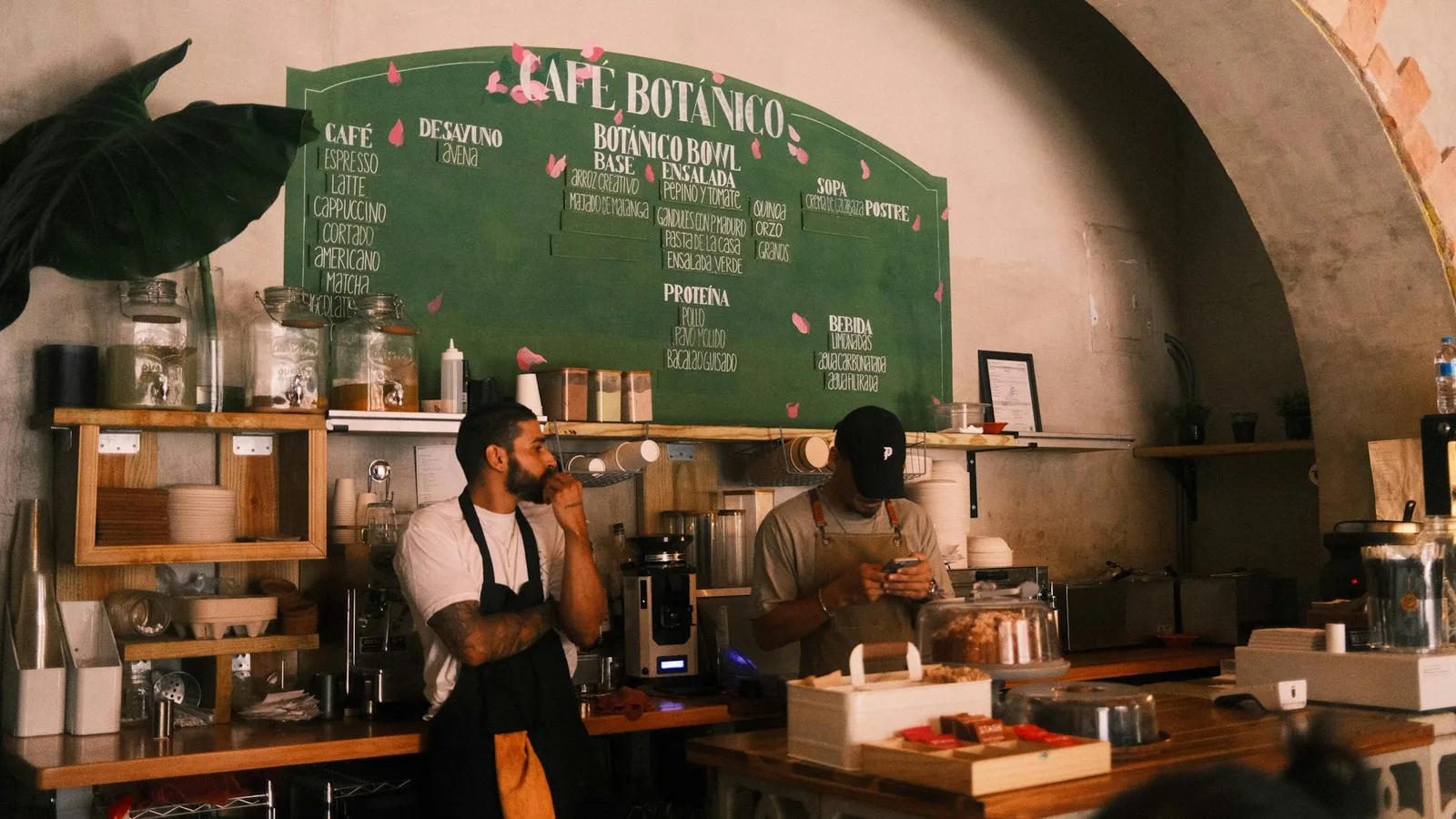
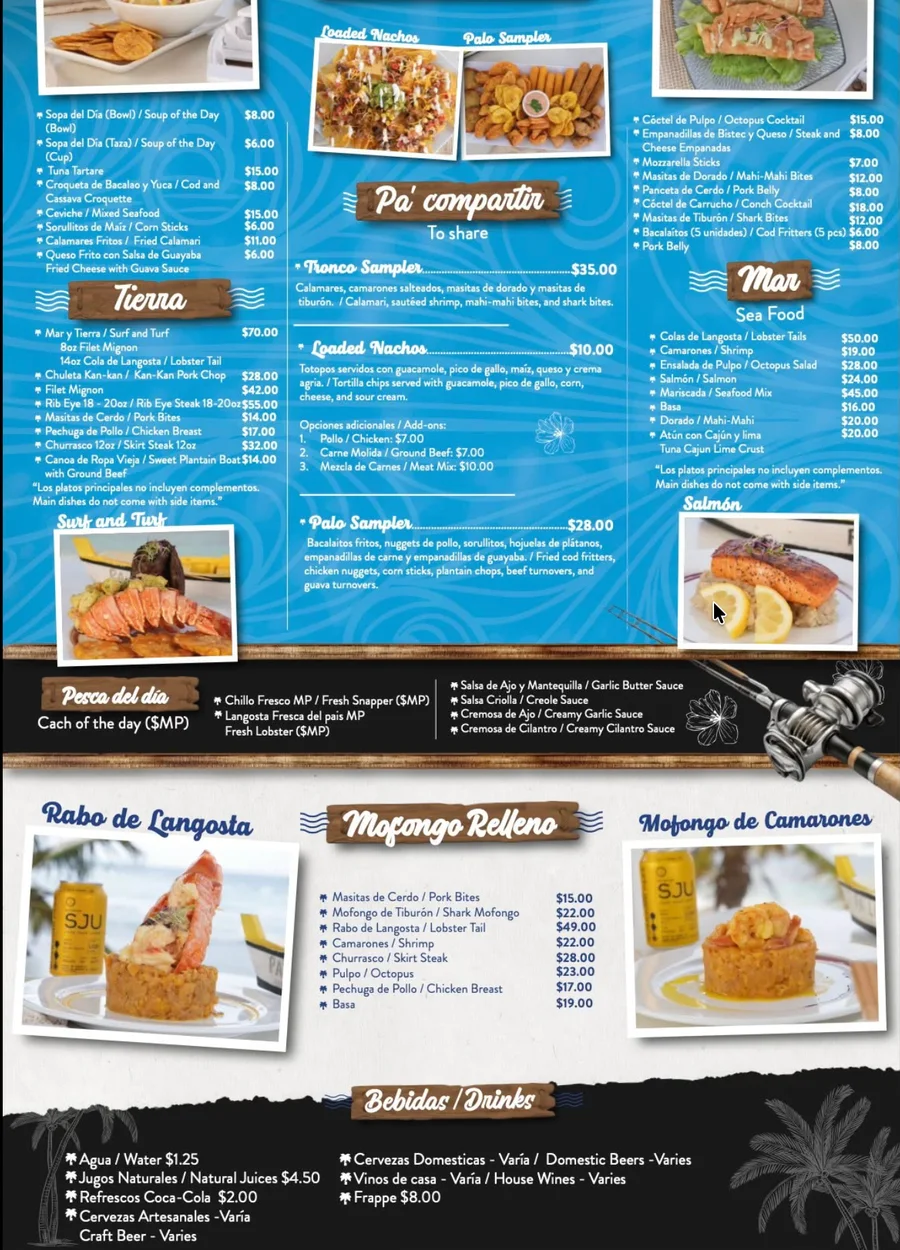
Your menu is there. You posted it. It took work: you laid it out, you got the prices right, you made it look like your place. And now they are pinching and dragging around a photograph of it on a screen the size of a hand, trying to read eight point type that was designed to be printed on paper and stood on a table.
They give up after about twenty seconds and pick somewhere else. Not because your food is worse. Because they could not read the menu, and being hungry makes people impatient rather than thorough.
That is the visible cost, and it is the smaller one.
What we found around here
On September 8, 2026 we pulled every food business OpenStreetMap records within fifteen kilometres of the centre of Isabela, the same circle we used for the Google Maps piece, which takes in Isabela, Aguadilla, Quebradillas and part of Moca. It returned 179 food businesses, of which 22 have a website recorded.
We took the nine independent ones, left the chains out, and opened every one in a real browser rather than a script, because a script cannot see a site that builds itself with JavaScript and would have reported empty pages that are not empty.
Here is what we found:
- 🚫 Two of the nine serve no website at all. One domain does not resolve. The other is registered but points at nothing, so there is a name somebody is paying for and no site behind it.
- 📄 Of the seven that load, exactly one publishes its menu as real text, with sixty prices written on the page as words and numbers rather than baked into a picture.
- 🔍 None of the nine, not one, tells Google it has a menu using the property Google's own documentation asks for. More on that in a moment.
Two honest limits, because we would want them if we were reading this. OpenStreetMap is maintained by volunteers, so 22 websites out of 179 businesses undercounts the real number: this is a hand-check, not a census, and we are not going to dress nine businesses up as one. And a restaurant might have a menu page our check did not find, since we followed links that say menu or carta.
Set that beside what we counted on September 6, from Google's own listings: 252 restaurants still open around Isabela, and 56 of them, 22.2%, point at Facebook or Instagram instead of a website. On those platforms a menu is a picture by definition. There is nowhere else for it to go.
So the photo menu is not a fringe habit here. For most places, it is the only menu that exists.
Nobody chose this, and that matters
We want to be careful here, because this is the part that usually gets written with a sneer.
You did not decide to make your menu unreadable. You decided to get a menu out this week. The printer sent back a PDF. Canva gave you a JPG. Your daughter took a photo of the board with a good camera. Every one of those is a picture, and every one of them was the fastest path from “I need a menu” to “there is a menu.”
Nothing in that chain ever told you that a photo of words is not words. Why would it. On your phone a photo of a menu and a typed menu look identical. You can read both. The difference only shows up somewhere you never see, which is inside the machines deciding what to show people who have not found you yet.
This is the whole pattern we keep running into: you are excellent at using this stuff and nobody ever handed you the part underneath. That is not a gap in you. It is a gap in what has not been explained thoroughly.
The three things a photo menu breaks
Your dish names are not on your page
Here is the mechanical part, and it is simpler than it sounds.
Text is text. A photograph of text is a grid of coloured dots that happens to look like text to a human eye. When your menu is a photograph, the page it sits on contains an image file and, usually, an empty alt attribute (this attribute should describe the image in detail). It does not contain the word mofongo. It does not contain the word birria. It does not contain the words gluten free.
So somebody in Aguadilla searching for the exact dish you are known for is searching for words that live on your menu and appear nowhere in your website's text. You sell the thing they want. You are simply not findable by its name, because the name is not written anywhere a search can reach.
Google publishes what it wants here and it is unusually specific. In its LocalBusiness structured data documentation, Google lists menu as a recommended property and defines its value as a URL: “For food establishments, the fully-qualified URL of the menu.” Not an image. Not a PDF someone downloads. A web address that leads to your menu.
None of the nine sites we checked provides one.
Some of your customers cannot use it at all
The accessibility standard is not vague about this, and it is not optional politeness.
The W3C's Web Content Accessibility Guidelines, Success Criterion 1.4.5, is titled “Images of Text” and sits at Level AA. It reads: “If the technologies being used can achieve the visual presentation, text is used to convey information rather than images of text.”
Plain version: if you can do it with text, use text.
The reason is practical rather than bureaucratic. Text reflows when somebody turns their font size up, and older customers do turn their font size up. Text can be read aloud by a screen reader. Text can be translated by a browser, which matters in a town where some of your customers read Spanish, some read English, and the ones who just got off a plane read neither. A photograph does none of these. It gets bigger and blurrier, and that is all.
A picture of a menu locks out the customers who need it most, including the ones with money and reading glasses.
The AI cannot answer with you
This is the newest cost and the one moving fastest.
We covered Google's Ask Maps in the Maps piece, the conversational layer Google announced on March 12, 2026 that now sits inside Google Maps. People are asking whole questions instead of typing keywords. Where can I eat near Jobos that has something for a coeliac. Which place near the beach does breakfast on a Sunday. Is there anywhere around here doing vegetarian.
Every one of those questions gets answered out of menu content. If your menu is a JPG, there is no menu content to answer from. You are not competing badly for those questions. You are not in the running, and you will never see the customer you did not get, which is what makes this so easy to keep ignoring.
What actually fixes it
The fix is smaller than the problem, which is the good news.
Your menu needs to exist as text on a page of its own. That is the whole requirement. Dish name, description, price, written as text a browser can select and copy. Not a design project. Not an app. A page.
Keep the beautiful version. Genuinely, keep it. Print it, hang it, post the photo on Instagram, put it on the board outside. The photograph is doing real work in the room and on social. It simply cannot be the only place the information lives.
Then three things that cost nothing extra once the text exists:
- Put the menu page address in the website field of your Google Business Profile, and in the
menuproperty if whoever built your site can add it. That is the exact thing Google's documentation asks for. - Write the prices as text, and keep them current. A menu page with last year's prices is worse than no page, because it turns a hungry customer into an annoyed one at the counter.
- Say the things people search for. If you make it gluten free, write “gluten free” on the page. If the mofongo comes with shrimp, write shrimp. The words a person types are the words that have to be on the page.
If your menu changes weekly, put the fixed part in text and let the specials be the photo. Nobody is asking you to retype a chalkboard every Tuesday.
About those two domains
Two of the nine businesses we checked are paying for a domain name that serves nothing. Somebody registered it, the site never got built or it lapsed, and the name renews quietly every year.
If that is you, you are further along than you think and it is worth ten minutes to find out. You already have the address. What is missing is the page at the end of it. Check the email the renewal notice comes to and you will find who is holding it.
What to do this week
Half an hour, once, and it is done.
- Open your own menu on your phone, the way a customer would find it. Pinch to zoom. Notice how long it takes to read a price.
- Type the menu out as text somewhere, anywhere. A note, a doc, an email to yourself. This is the only part that takes real time and it is the part only you can do, because only you know what you actually serve now.
- Get it onto a page of its own on a website, with the prices as text.
- Put that page's address into the website field of your Google Business Profile.
- Keep posting the pretty photo version everywhere you already post it.
You run a kitchen through a power cut. You are not going to be defeated by typing out a menu.
Or hand us step three
Steps one, two, four and five you can do this week with a phone and twenty minutes. Step three is the one that stops people, and it is the one we do.
We build the menu page, set your dishes and prices as text, mark it up so Google gets the menu address it asks for, and connect it to your Google Business Profile. When your prices move, we move them. You go back to the kitchen.
We are in Isabela. We work in Spanish and in English, with restaurants, food trucks and salons around Isabela, Aguadilla, Rincón and Quebradillas.
Bring your menu, however it exists right now. A photo, a PDF, a printout, a note in your phone. Whatever it is, it is enough to start from.
Frequently asked questions
Can Google read the text inside my menu photo?
Assume not, and do not build on it. Google has image recognition, but it publishes no commitment to treating text inside a picture as your page's content, and its own guidance for images is to describe them with alt text so it can understand them. The safe answer is the instruction Google does state plainly in its LocalBusiness documentation: give it the fully-qualified URL of a menu.
Is a PDF menu good enough?
Better than a JPG, still not the answer. A PDF is a download, it opens awkwardly on a phone, and it is usually built from the same print layout that does not reflow when somebody enlarges the type. A plain web page beats it on every measure that matters here.
My menu changes every week. Do I have to redo the page every time?
No. Put the part that does not change into text, which for most kitchens is most of the menu, and let the weekly specials be a photo or a short line you update. The goal is that your regular dishes are findable, not that every special is.
I only have Instagram. Where would the menu page even go?
That is the real question and it is bigger than the menu. On Instagram a menu can only ever be a picture, because that is what the platform is for. The menu is one of the reasons a page of your own starts to pay for itself, and we have written separately about what a site actually costs.
Does this really matter if most of my customers already know me?
For the ones who know you, no. This is entirely about the ones who do not yet: the family passing through on the 2, the couple who just moved to Aguadilla, the person whose usual place is closed tonight. Those people find you by searching for food, and searching for food means searching for words.
How long does the menu page take?
The part only you can do is typing out what you actually serve. Once we have that, the page itself is quick. If you want a number for your own situation, ask us on a call and we will give you one rather than a range.
Sources
Local website data: collected by Kernelis Studio on September 8, 2026 via the OpenStreetMap Overpass API, amenity types restaurant, fast_food, cafe, bar and ice_cream, within a 15 km radius of 18.5008, -67.0244, with each site then opened in a rendering browser rather than a text fetcher. OpenStreetMap is volunteer-maintained and undercounts, so this is a hand-check rather than a census. Local listing counts of September 6, 2026: Kernelis Studio, You don't come up on Google Maps. Menu structured data: Google, Local Business (LocalBusiness) structured data, menu listed as a recommended property of type URL. Images of text: W3C, Understanding Success Criterion 1.4.5: Images of Text, Web Content Accessibility Guidelines 2.2, Level AA. Ask Maps: Google, Ask Maps and Immersive Navigation: New AI features in Google Maps, March 12, 2026.